
Mental Wellness During COVID Isolation

Maintaining Mental Wellness During Covid Isolation can be difficult. We are all experiencing a “collective trauma,” so it is important that we first recognize this. While we might be more adaptive to our environment now, there is still some grieving from loss of normalcy and routine that we may also be experiencing.

Now that we have created this awareness of some traumas that many of us have experienced as a group, we can now look at ways to protect our mental wellbeing as we continue to work from home and isolate from others. We’ve also contributed to this article on trauma triggers during pandemic. Read more here.

5. Support System During COVID

We’re social beings and we need people. Creating a support system even virtually can be useful. This support system must be supportive. Reaching out via video calls or video conferencing can be useful. However, phone calls can work just as well without the continues eye strain if you’re working from home on your computer during the day.

4. Boundaries During COVID

Setting up boundaries around work spaces and work can be useful. Just because we’re working from home doesn’t mean to work more. We set up boundaries to protect ourselves and our mental wellness, so consider this your opportunity to protect you.

3. Structure/Routine During COVID

– Work a regular schedule as you would if you were in an office. Wake up at the same time you normally would have, get dressed and go to your workspace. Ideally this would not be in your same sleep space, so not to taint your resting space. Take lunch and breaks at regular times and stick to the routine. We need routine in our lives because this helps minimize anxiety. The more control we can have in our day the better we’ll feel.

2. Exercise During COVID

There is a brain body connection and physical health is just as important as mental health and vice versa. Going for a brisk 10 minute walk can help with eco-therapy and also provide some cardio in your day. Exercising also helps with sleep and mental wellness.

1. Mindfulness During COVID

Staying present in the moment can help with anxiety and stress and minimizing the sense of overwhelm we may be experiencing from all the sudden changes this year has brought us. Practicing 5 minutes a day of mindfulness can be extremely calming for us in staying in the present moment where anxiety cannot live.

Mindfulness Tips

For more information on tips for managing anxiety during COVID-19 see our Wellness tips here.

Anti-Racism Resources

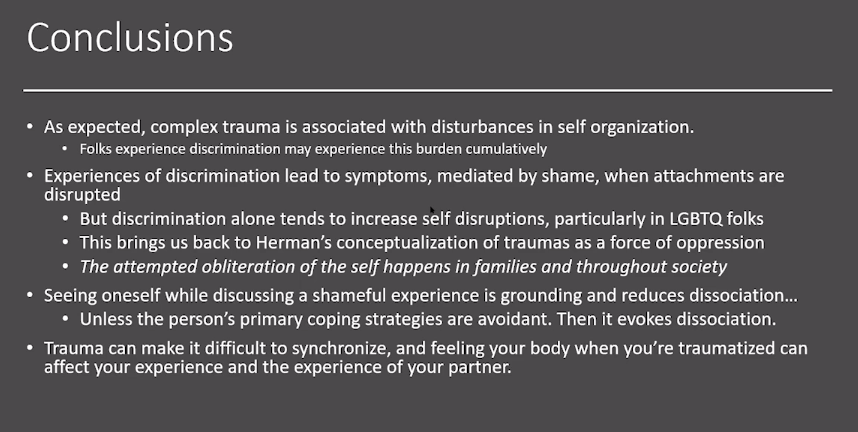
Oppression is traumatic. Inequality is traumatic. Marginalization is traumatic. Discrimination is traumatic. Bullying is traumatic. Racism is traumatic. New research shows trauma caused by discrimination can create disturbances in the organization of the self mediated by shame. We put together some resources for how to do anti-racist work.

Ibram X. Kendi’s Stamped from the Beginning: The Definitive History of Racist Ideas in America, which won the 2016 National Book Award for Nonfiction can be found on our Austin Trauma Therapy Center spotify playlist.

Articles to read:

Videos to watch:

Podcasts to subscribe to:

Books to read:

Films and TV series to watch:

  • 13th (Ava DuVernay) — Netflix
  • American Son (Kenny Leon) — Netflix
  • Black Power Mixtape: 1967-1975 — Available to rent
  • Clemency (Chinonye Chukwu) — Available to rent
  • Dear White People (Justin Simien) — Netflix
  • Fruitvale Station (Ryan Coogler) — Available to rent
  • I Am Not Your Negro (James Baldwin doc) — Available to rent or on Kanopy
  • If Beale Street Could Talk (Barry Jenkins) — Hulu
  • Just Mercy (Destin Daniel Cretton) — Available to rent
  • King In The Wilderness  — HBO
  • See You Yesterday (Stefon Bristol) — Netflix
  • Selma (Ava DuVernay) — Available to rent
  • The Black Panthers: Vanguard of the Revolution — Available to rent
  • The Hate U Give (George Tillman Jr.) — Hulu with Cinemax
  • When They See Us (Ava DuVernay) — Netflix

Organizations to follow on social media:

Resources for parents to raise anti-racist children:

More anti-racism resources to check out:

Where to donate if you would like to:

If You Want to Provide Bail for Protesters:

  • Minnesota Freedom Fund

The MFF is a local organization that pays for criminal bails and immigration bonds, and has vowed to help free protesters incarcerated by police. As of Friday there have been thousands of new donors to the fund, with many contributors on social media matching pledges within their networks. Give here.

If You Want to Help Protesters with Legal Fees:

  • Know Your Rights Camp

Founded by Colin Kaepernick, the Know Your Rights Camp works to empower black and brown communities by providing free education and other resources. Its latest initiative in Minnesota is focused on hiring defense attorneys for anyone arrested protesting police brutality. Donate here.

  • The American Civil Liberties Union (ACLU)

The ACLU is a nationwide nonprofit that operates in all 50 states and provides legal assistance wherever civil liberties are at risk. “Make no mistake: George Floyd should be alive today,” ACLU policing policy advisor Paige Fernandez said in a statement. “The officers responsible must be held accountable. The public has seen the video. To call this a ‘medical incident’ is an insult.” You can donate to the local chapter in Minnesota here.

If You Want Every Vote to Count:

  • Fair Fight

The dearth of humane political leadership in moments of crisis can make anyone feel hopeless. Fair Fight, an organization focused on free and fair elections, was founded by Georgia democrat Stacey Abrams with a mission to end voter suppression and elect more progressive voices to public office. You can donate here.

If You Want to Ensure the Freedom of the Press:

  • Committee to Protect Journalists (CPJ)

With the media a frequent target of the president, press freedoms are more vital than ever. (On Friday alone, Minnesota state police arrested a black CNN reporter live on air for no clear reason.) CPJ is an independent organization that fights against press freedom violations worldwide, both through diplomatic efforts and by working with local legal organizations. Donate here.

Some of these resources were compiled by Sarah Sophie Flicker, Alyssa Klein in May 2020.

What Happens in an EMDR Therapy Session?

What is an EMDR Therapy session? Eye Movement Desensitization and Reprocessing (EMDR) is a safe trauma treatment to psychotherapy that has been practiced in the U.S. and around the world for the past 25 years. It integrates many successful elements of a range of therapeutic approaches, yet there are aspects of EMDR that are unique. In particular, the therapist leads the patient in a series of bilateral eye movements while the patient simultaneously focuses on various aspects of a disturbing memory.

What is Bilateral Stimulation in EMDR?

The left – right eye movements in EMDR therapy are a form of “bilateral stimulation.” Bilateral Stimulation means you are using both sides of the brain simultaneously. Other forms of bilateral stimulation used by EMDR therapists include alternating bilateral sound using headphones.

Alternating tactile stimulation using a handheld device that vibrates or taps to the back of the patient’s hands, or a gentle tapping, is also used. More recently with COVID, virtual EMDR Therapy Sessions have become more popular integrating bilateral stimulation without the need to meet in person, with similar success.

Why use EMDR in Therapy?

EMDR therapy sessions are applicable for a wide range of psychological problems that result from overwhelming life experiences. During the processing of difficult memories, a person who has been abandoned by a spouse may come to realize that she is loveable and is no longer overwhelmed by negative feelings about herself or participate in unproductive behaviors stemming from those feelings.

This is because our brain tends to lump similar negative experiences together. A person fearful of driving due to a terrible car accident in the past may end the session feeling safe to drive again.

Where did EMDR come from?

EMDR Therapy Sessions were discovered by Francine Shapiro, Ph.D., who grasped the use of bilateral stimulation.  Dr. Shapiro found—quite by accident—that emotional and behavioral symptoms resulting from disturbing experiences tend to resolve naturally when a person allows him/herself to recall various elements of a memory while engaging in bilateral stimulation such as lateral eye movements.

Dr. Shapiro and her associates developed a number of procedures for coordinating this “dual awareness”.  The procedures have been refined and validated through controlled research at several centers around the world.  Precise and careful use of these procedures can lead to a safe processing of memories, such that the negative thoughts and emotions disappear.

How EMDR Can Help

More than a set of “techniques”, the EMDR Therapy approach provides a model for understanding human potential, including how positive experiences support adaptive living, or psychological health, and how upsetting experiences can sometimes lead to psychological problems that interfere with a person’s ability to meet life challenges.

The EMDR protocol guides clinicians in careful assessment and preparation work, particularly for persons with histories of multiple traumas. An EMDR Therapy Session procedures should only be used by a fully trained EMDR clinician, who holds licensure in the mental health field. EMDRIA is a professional association for EMDR practitioners and researchers to seek the highest standards for clinical use of EMDR.

Words From Our Austin Trauma Therapy Center EMDR Trained Therapist

“EMDR therapy is one of the most powerful tools I’ve encountered for treating posttraumatic stress. In the hands of a competent and compassionate therapist, it gives people the means to heal themselves.” See more information about EMDR Therapy Sessions, and how it can help with childhood trauma, here.

Does EMDR Work with Trauma?

Does EMDR Work? EMDR (Eye Movement Desensitization and Reprocessing) therapy has been declared an effective trauma treatment by a wide range of evidence-based organizations. EMDR uses bilateral stimulation to help reprocess negative memories and densistize these in our mind and body.

Symptoms of Trauma

EMDR can help those suffering from major traumas such as sexual or physical assault, combat experiences, accidents or the sudden death of a loved one can be diagnosed with post-traumatic stress disorder (PTSD)if certain symptoms exist. These include intrusive thoughts of the event; nightmares or flashbacks; avoidance of reminders of the incident and increased arousal, which can include problems such as sleep difficulties; irritability; being easily startled, panic attacks or having difficulty concentrating.

Additionally, unexplained physical symptoms, including fatigue, gastrointestinal problems and pain can also go along with this disorder. Anyone suffering from PTSD or even complex PTSD (C-PTSD) can benefit from EMDR therapy.

EMDR and Unprocessed Memories

The negative impact on the person’s sense of self takes place since, just as with diagnosed PTSD, “unprocessed memories” are running the show. However, if an experience is too disturbing, it disrupts the system, causing the memory to be stored with the negative emotions, physical sensations and beliefs and the past becomes the present.

That’s where EMDR therapy can help. When a person is held back from doing things he or she would like to do by feelings of  anxiety, fear, or unremitting sadness, and avoiding people or situations — the reason can generally be found in the memory networks. Many times the problems are unprocessed memories from the past that are interfering with the present.

3 Types of negative feelings associated with PTSD

Generally, there are three categories of negative feelings and beliefs that can emerge with PTSD. These are the feelings of not being good enough, not being safe, or not being in control. If we often feel insecure, fearful or anxious — or notice that these feelings arise intensely in certain situations — we have the tendency to blame ourselves. Friends aren’t able to reassure us no matter how hard they try, because the problem is generally caused by the unprocessed memories associated with the negative emotions, physical sensations and beliefs.

When certain things happen in the present — even minor ones, like the expression on someone’s face — the memories can get triggered and the emotions, beliefs and accompanying sensations (like a tightness in stomach or chest) surface. We don’t get an image that goes along with it, so we don’t realize it’s really the “old stuff.” Then, since our distress can debilitate us, we may have problems interacting with people in the present, causing new memories of “failures” to be stored and thus increase the problem. That’s how depressions can also increase: our new negative experiences just dig the hole more deeply.

Goal of EMDR

EMDR therapy is not limited to simply taking symptoms away. It addresses the past, present and future. The goal is to allow the person to achieve a complete state of emotional health. It has also been used to help athletes, performers and executives to achieve a state of “peak performance.” At Austin Trauma Therapy Center, we have experienced therapists trained in EMDR.

4 Strategies for Staying Calm Amid COVID-19

Staying Calm With Anti-anxiety Tips Amid COVID-19

Like you, we’re closely monitoring the quickly developing effects of the Coronavirus (COVID-19) pandemic. I share your pain for the losses and massive disruption you have incurred over the past week; and will continue to incur as social distancing and closing mandates continue.

We put together 4 strategies for managing anxiety at home and staying calm amid COVID-19. We teach anti-anxiety strategies at Austin Trauma Therapy Center almost daily with our clients, and we thought we’d share them with the public during these unprecedented times. Here are some quick and simple techniques to use at home:

4×4 breathing to Bring Down Anxiety

  1. Using a simple approach like 4×4 breathing is helpful for bringing your breathing back to a calm and healthy pace. This technique is used often with PTSD. First, you’ll inhale a breath in while counting to yourself, one, two, three, four, then you’ll hold that breath for four seconds counting to yourself, one, two, three, four, and then you’ll exhale that breath, counting to yourself, one, two, three, four. You’ll want to repeat this at least 3-5 times. So the quick version is inhale-1234,hold-1234, exhale-1234, repeat.

Grounding Your Anxiety With a Body Scan

2. In a sitting position, you’ll start by placing both feet on the ground noticing the ground underneath you. Can you feel the ground? what does that feel like? Can you feel your toes, what about your ankles, next scan your calves, can you feel them? Moving on to your knees, what do your knees feel like? How about your thighs, and your back–do you notice what your back feels like, and is there any tension here?

Moving onto your arms and shoulders. Noticing what these parts feels like. Now moving onto you chest and neck, noticing these parts as you scan them and move onto your jaw. Is your jaw clenched or relaxed? How about your head, what do you notice here? Lets scan our body parts as we move back down to our jaw, and neck, and chest and shoulders and elbows and stomach, and hands and hips, and thighs, now knees and ankles and toes. As you move to each part spend a few seconds with each.

This strategy can be useful for managing anxiety while at home.

5, 4, 3, 2, 1 – Shifting the Anxiety

3. This next strategy is my favorite and helps with mindfulness. You’ll notice 5 things that you see, and if it feels helpful you can name those 5 things. Next, you’ll notice 4 things you feel. Just like the grounding, noticing the feeling of the socks on your toes, or shirt on your body. Next 3 sounds you notice, and 2 smells you notice, and lastly 1 thing you taste. What we’re doing here is shifting the attention away from the future-focused anxiety and bringing ourselves back into body awareness.

Journaling or getting creative with anxiety

4. The last strategy involves using your creative energy to shift the focus away from the anxiety through journaling two things you are grateful for each day. This can be helpful for bringing positivity to your day during these times. Putting together a jigsaw puzzle, building legos (these aren’t just for kids anymore), or channeling the creativity through music/ writing. All of these strategies can help you spend some time focusing on the self, rather than external factors.

Lastly, if you find that your stress and anxiety is increasing, take a break from social media and news outlets to twice a day. Feel free to browse our other blogs for tips and information. You can visit the World Health Organization for more information about the Coronavirus.